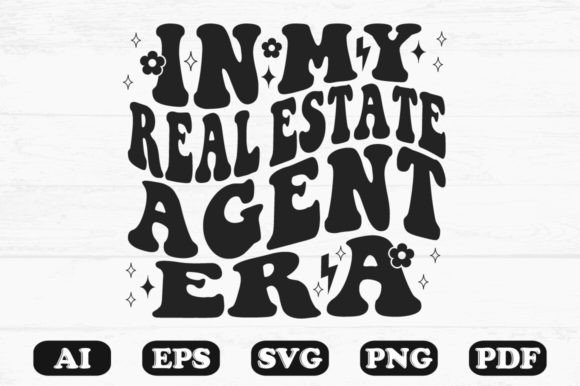
In My Real Estate Agent Era Retro Wavy Review
I have spent years reviewing embroidery designs for both personal projects and commercial ventures, so I know that a pretty preview on a screen does not always translate to a beautiful finished product. When I first encountered In My Real Estate Agent Era Retro Wavy, my initial reaction was one of curiosity mixed with professional skepticism. The retro wavy aesthetic is undeniably trendy right now, but the real question for any designer or small business owner is: will this hold up under the needle?
The design captures a specific mood immediately. It feels nostalgic, confident, and slightly playful, perfectly suited for the "era" concept that has taken over social media feeds. The typography is bold yet fluid, creating a visual rhythm that suggests movement even in a static image. For a craft business owner looking to create custom apparel or personalized gifts, this design offers a unique hook. It is not just text; it is a statement piece that can elevate a simple tote bag or a standard sweatshirt into something that feels curated and boutique-worthy.
From Digital File to Finished Product
Let's imagine a real-world scenario. You are preparing for a holiday market or launching a new line of merchandise for your Etsy shop. You decide to use In My Real Estate Agent Era Retro Wavy to create a collection of embroidered patches and aprons for real estate professionals who want to add a touch of personality to their workwear. The potential here is significant because the design speaks directly to a niche audience while remaining stylish enough for general wear.
When I evaluated how this design would perform as an actual machine embroidery file, I focused on the interplay between the wavy lines and the lettering. In a satin stitch application, which is common for this type of typography, the curves need to be smooth to avoid puckering. The retro wave shape adds a layer of complexity that requires careful thread color selection. If you choose high-contrast threads, the design pops with energy, making it ideal for light-colored fabrics like cream canvas totes or white baby onesies. However, on dark fabrics, the wavy details might get lost if the fill density isn't sufficient.
I also considered the versatility of this design across different categories within Crafts and Graphics. While it is marketed heavily towards cutting files for vinyl enthusiasts, its structure translates surprisingly well to embroidery. The clean lines make it suitable for a variety of garments, from fitted t-shirts where the design needs to sit comfortably on the chest, to looser sweatshirts where the retro vibe can really breathe. The design assets provided allow for flexibility, meaning you can scale the text or adjust the wave intensity depending on the space available on your hoop size.
Navigating Stitch Density and Fabric Texture
One of the most critical aspects of using In My Real Estate Agent Era Retro Wavy in a commercial setting is understanding stitch density. Embroidery is a physical medium, and every stitch adds weight and tension to the fabric. If the design includes too many fill stitches in a small area, it can become stiff and uncomfortable, especially on baby clothes or delicate nursery decor items.
For this specific design, I recommend testing the stitch density on scrap fabric before committing to a final customer order. The wavy elements require a balance between running stitch for definition and satin stitch for coverage. If you are working with textured fabrics like heavy denim or corduroy, the design might need a stabilizer that provides extra support to prevent the waves from distorting. Conversely, on thin or stretchy fabrics, the tension of the embroidery could cause the material to pucker around the letters, ruining the retro aesthetic.
There are also limitations to consider regarding small hoop sizes. If you intend to create tiny embroidered patches or embellish small areas of a cap, the detail level of the wavy text might be challenging to execute cleanly. Tiny lettering often loses legibility when reduced in size, particularly with complex fonts. In these cases, simplifying the design or focusing on the main phrase without the full wave effect might yield better results. Always inspect small details closely after stitching to ensure the texture remains crisp and the message is clear.
Strategic Placement for Maximum Impact
The placement of In My Real Estate Agent Era Retro Wavy can make or break the perceived value of your handmade product. On a large item like a kitchen towel or a pillow cover, the design acts as a centerpiece, drawing the eye immediately. This makes it excellent for holiday gifts or wedding presents where the recipient wants a focal point that reflects their personality.
However, on curved surfaces like caps or fitted hats, the curvature of the hat interacts with the wavy lines of the design. A straight horizontal layout might look distorted on a rounded surface. You may need to adjust the digitization or select a design that accounts for the curve to maintain the integrity of the retro style. Layered garments present another challenge; if you plan to embroider this over a pocket or onto a jacket with multiple layers, ensure that the stabilizer is robust enough to handle the bulk without shifting during the stitching process.
For digital product sellers and printable mockup creators, this design offers a great opportunity to showcase brand consistency. Using consistent thread colors and backgrounds in your marketing materials helps build trust with buyers. When customers see a professional presentation of In My Real Estate Agent Era Retro Wavy, they are more likely to perceive the finished product as high quality, which increases buyer engagement and sales conversion rates.
Practical Notes for the Professional Designer
Before you start stitching, there are several technical checks you must perform to ensure success. First, review the stitch density settings in your software. If the design comes as a digital embroidery file, verify that the stitch count aligns with the fabric type you are using. High-density fills are great for durability but can feel heavy on lightweight materials.
Thread color contrast is another vital factor. To capture the true spirit of the retro wavy theme, consider using vintage-inspired palettes like mustard yellow, burnt orange, or sage green against neutral backgrounds. These combinations enhance the nostalgia factor and make the design stand out in a crowded marketplace. Additionally, always test the design in black and white mockups to check for legibility and balance before investing in expensive materials.
Licensing is a non-negotiable aspect of commercial embroidery. Confirm whether the license terms allow you to sell finished products made with In My Real Estate Agent Era Retro Wavy. Some digital assets restrict commercial use or limit the number of units you can produce. Failing to check these terms can lead to legal issues down the road, so clarity is essential for protecting your small shop product line.
Finally, think about the washing instructions for your finished product. Dense stitch areas and decorative accents can sometimes trap lint or fray if not stabilized correctly. Educate your customers on proper care to ensure the longevity of the embroidery. By taking these practical steps, you transform a simple graphic into a durable, professional-grade item that represents your brand well.
In conclusion, In My Real Estate Agent Era Retro Wavy is a versatile and engaging design that fits seamlessly into the world of modern crafts. Whether you are creating custom apparel for a client, designing a patch for a boutique, or adding a personal touch to a gift, this design offers a strong foundation for creativity. With careful attention to fabric choice, stabilizer usage, and stitch density, it can become a standout piece in your portfolio of design assets.